
News · 10 August 2026
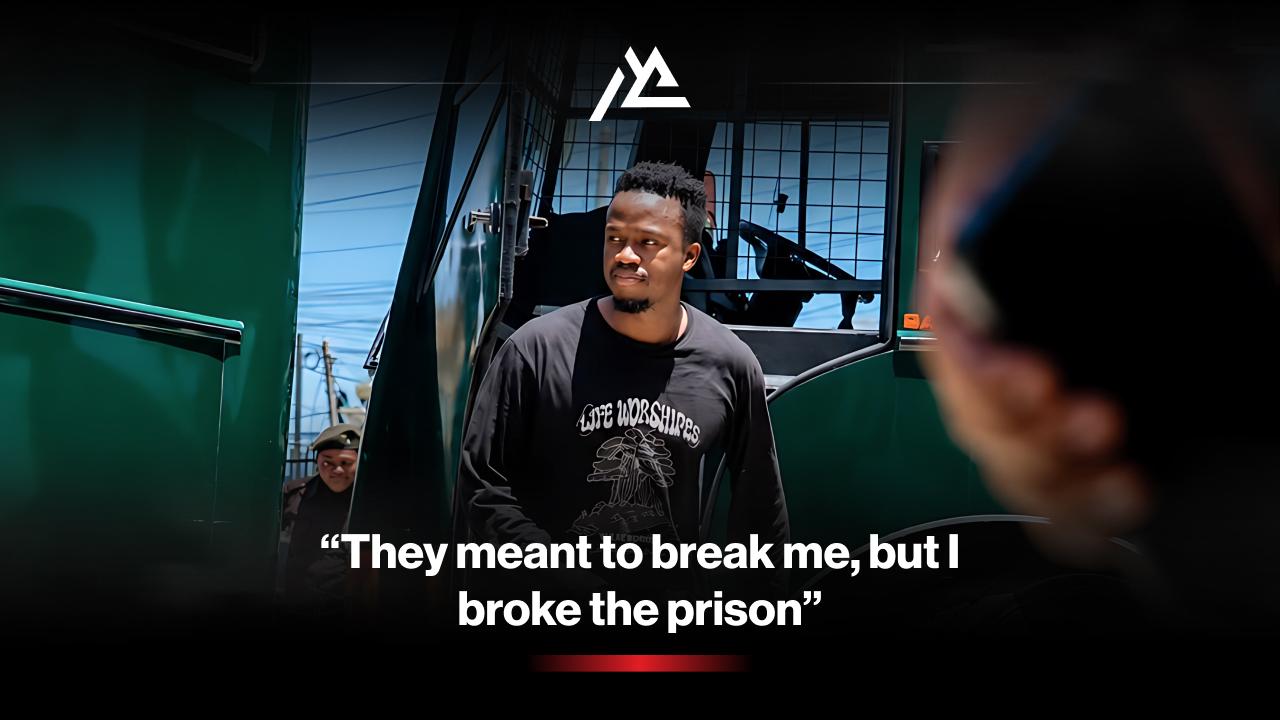
Mika Chavala “They Meant to Break Me, But I Decided to Break the Prison”
When Mika Chavala was imprisoned, he faced a situation that could easily have broken his spirit. For 35 days, he was separated from the outside world, without the freedom to conduct business, access the internet or live his normal life. Yet instead of allowing confinement to consume him, he made a deliberate decision: he would not waste his time. At around 1:02:54, Chavala explains the mindset that transformed his experience: “Time is life. If you waste time, you waste your life.” He began writing extensively, spending nights developing ideas that eventually became several books, including A Free Mind Builds a Free Future. The experience also changed his understanding of freedom. At 1:04:05, he reflects on what freedom truly means after having it physically taken away. For him, the experience revealed that there is a form of freedom that cannot easily be taken away—the freedom of the mind. By 1:05:29, he explains that although his body was confined, his mind remained free. He refused to allow his circumstances to determine his purpose. His story ultimately raises a powerful question: What do you do when life gives you circumstances you cannot control? For Chavala, the answer was to create, write, reflect, serve and continue pursuing his purpose. His experience offers a broader lesson: you may not always control your circumstances, but you can choose how you respond to them. And perhaps that is where true productivity begins—not with having more time, but with refusing to waste the time you have.
Turning Isolation Into Productivity
At approximately 1:01:02, the conversation turns to one of the most remarkable aspects of Chavala’s time in prison: his decision to write.The interviewer notes that Chavala had written more than five books during his period of confinement, including A Free Mind Builds a Free Future, the book he would bring to the public on 15th of August 2026.Chavala explains that isolation can force a person to discover things within themselves that they may never have discovered under normal circumstances.According to him, when someone is placed in the same environment for an extended period, there are two possible responses: they can become unproductive and overwhelmed, or they can use the circumstances as an opportunity for growth.The difference, he argues, is mindset.
“I will make this time count,” was the decision he made.At 1:02:54, Chavala summarizes the philosophy that guided him: “Time is life. If you waste time, you waste your life.”He refused to allow his circumstances to determine how he would use his time.Without a phone, internet connection or access to the outside world, he turned to the one resource he still controlled: his mind.35 Days of Writing
Chavala reveals that he spent much of his time writing, often continuing late into the night while others slept.At around 1:03:39, he describes repeatedly writing down ideas as they came to him. The isolation gave him an environment in which he could think deeply, reflect and explore ideas that had previously remained unexplored.One of those ideas eventually developed into A Free Mind Builds a Free Future.But the experience also led him to a deeper understanding of freedom.At 1:04:05, Chavala recalls asking himself a fundamental question: What does freedom actually mean?Being deprived of physical freedom made him reconsider the value of things that people often take for granted.In his view, money, food and material possessions lose much of their significance when physical freedom is taken away. What becomes overwhelmingly valuable is the ability to determine what happens within your own mind.The Prison Could Control His Body, But Not His Mind
Perhaps the most powerful part of Chavala’s reflection comes at approximately 1:05:29, when he distinguishes between physical freedom and intellectual freedom.He acknowledges that he was physically confined, but argues that his mindset remained free.His reasoning was simple: if your mind remains free, physical confinement does not have complete control over you.He connected this realization to the historical example of Nelson Mandela, who spent 27 years imprisoned during South Africa’s struggle against apartheid.For Chavala, the lesson was not that imprisonment is insignificant. Rather, it was that the human mind can retain a sense of purpose and freedom even under extraordinary circumstances.“They Meant to Break Me, But I’m Going to Break You”
At approximately 1:08:27, Chavala recalls the mindset he adopted when he first entered prison.He says he prayed and effectively told the prison: “You were meant to break me, but I’m going to break you.”For him, “breaking the prison” did not mean escaping physically. It meant refusing to allow the experience to destroy his purpose, faith or ability to contribute to others.He says the experience ultimately became a mission.At 1:08:44, Chavala claims that more than 20 people accepted Jesus during his time there. Whether viewed through the lens of faith, personal transformation or service to others, his account presents imprisonment not merely as a period of confinement but as an environment in which he believed his purpose continued.His message was that circumstances can change, but purpose does not have to stop.“My Mission Must Continue Wherever I Go”At around 1:09:05, Chavala makes a broader statement about his understanding of purpose.He argues that wherever he goes, his mission must continue. Even beyond his lifetime, he wants his ideas and work to continue influencing people.His vision of legacy is therefore not centered solely on personal achievement. It is centered on whether the ideas he leaves behind can continue to inspire people long after he is gone.He describes a future in which people might encounter his name and begin discussing the ideas he once shared.For Chavala, that is what it means for a mission to outlive the individual.The Debt He Says He Owes Tanzanians
The conversation then moves into another deeply personal subject: Tanzania.At approximately 1:10:01, Chavala speaks about what he describes as a significant debt he feels he owes Tanzanians.He acknowledges that many Tanzanians prayed for him and wished for his safe return during his imprisonment.Rather than responding with bitterness, he says he chooses to love his country and its people.At 1:11:05, he describes himself as a patriot and says his love for Tanzania remains strong.His response is notable because it frames his experience not simply through personal grievance, but through a broader sense of responsibility toward his country.
Leadership Is Not a Political Seat
One of the most striking sections of the interview begins around 1:12:16, when Chavala challenges the common understanding of leadership.He argues that leadership should not be confused with popularity.According to Chavala, becoming famous does not automatically make someone a leader. Having followers, social media recognition or even political office does not, by itself, establish meaningful leadership.“Leadership is more than having followers,” he argues around 1:14:49.He believes leadership is fundamentally about influence and impact—particularly the ability to positively affect the lives, thinking and direction of others.At 1:13:27, he explains that although he does not occupy a government position or hold a political party seat, there are people who listen to him, learn from him and apply the ideas he advocates.That, in his view, is leadership.“I Don’t Need a Leader’s Salary to Lead”At approximately 1:15:53, Chavala takes the argument further.He says he does not need a government office, official title or leadership salary to make an impact.His tools, he says, are much simpler: a phone, a camera and a microphone.Through those tools, he believes he can influence minds and contribute to changing Africa.The underlying message is significant: in the digital age, leadership is no longer exclusively dependent on access to formal institutions.A person without political office can still shape conversations, influence ideas and mobilize people.Money or Influence?The interview concludes with a rapid-fire segment beginning around 1:16:21, where Chavala is asked to choose between competing concepts.When asked money or influence, he chooses influence.Asked Africa or the West, he chooses Africa.Between vision and implementation, he chooses vision, arguing that implementation requires something to implement.Between books and experience, he chooses experience.
Between faith and strategy, he chooses faith.
Between comfort and purpose, he chooses purpose.And when asked about inheritance versus success, he chooses inheritance.His reasoning reflects a consistent theme throughout the conversation: life should not only be measured by what an individual achieves personally, but also by what they leave behind for the next generation.How Does Mika Chavala Want to Be Remembered?At approximately 1:18:39, the interviewer asks perhaps the most important question of the entire conversation:“What do you want the next generation to remember you for?”After reflecting on the question, Chavala gives a simple answer at 1:19:14:“That Mika was a servant.”He defines a servant as someone who served his purpose in his time and in his generation.He says he wants to be remembered as someone who was not afraid, was not shaken, was not stopped and was not intimidated.Someone who believed in what he believed and worked day and night to ensure that the purpose entrusted to him benefited other people.A Legacy Bigger Than a NameThe final message from Chavala is ultimately about legacy.His story, as presented in the interview, is not simply about imprisonment. It is about what a person chooses to do when circumstances are beyond their control.He entered confinement with limited physical freedom, but he chose to protect the freedom of his mind.He lost access to the outside world, but gained time to write.He was physically isolated, but he says he found opportunities to influence others.And when asked how he wants history to remember him, he does not choose billionaire, politician, celebrity or even author.He chooses one word:Servant.A person who served his generation, pursued his purpose and used his life to help others.The interview closes with a declaration that captures the spiritual foundation behind his philosophy:“Jesus is Lord. Jesus is God.”For Chavala, the ultimate measure of a life may therefore not be how much power a person accumulates, how famous they become or how many people follow them.It may be much simpler:Did you use the time you were given to serve your purpose and make someone else’s life better?That is the legacy Mika Chavala says he wants to leave behind.

Comments
Join the conversation. You can comment anonymously.
Loading comments…